

 Deutsch
 Dutch
Dutch
 Russian
 Turkish

Dental problems are a common issue that people of all ages face. Dental treatments have advanced over the years, and dental inlay-onlay treatment is one such procedure that is commonly used today. In this comprehensive guide, we will take you through the details of inlay-onlay dental treatment and how it may help improve the appearance and function of your teeth.
What Is Inlay-Onlay Dental Treatment?
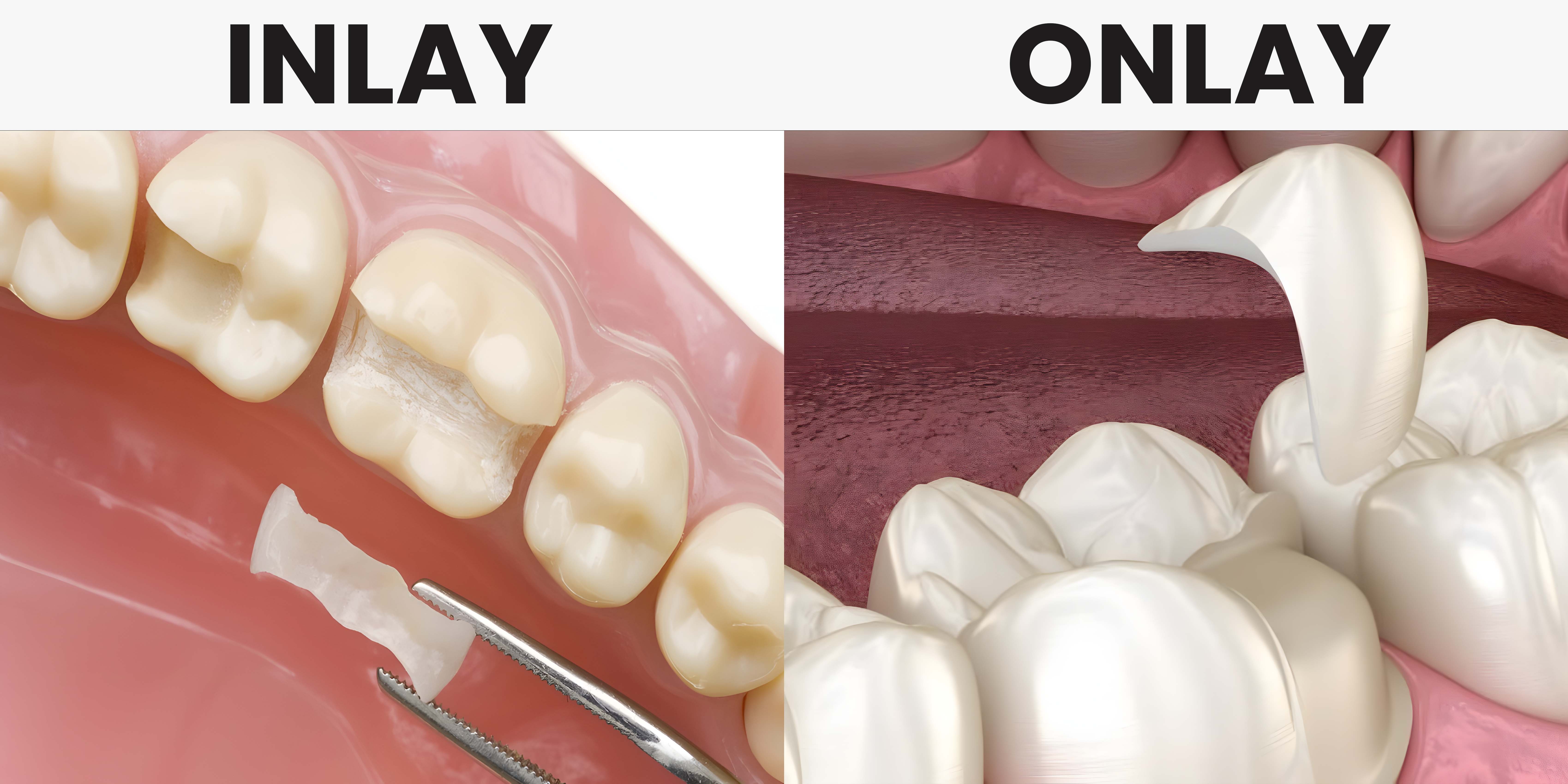
Inlay-Onlay Dental Treatment is a type of dental restoration that is used to repair and restore damaged teeth. It is also known as indirect fillings, as they are created outside the mouth in a dental laboratory. Inlay-Onlay treatment is used to repair teeth that have cavities, cracks, or other types of damage. The treatment is different from traditional fillings as they are made of porcelain, gold, or composite resin. Inlay-Onlay treatment is considered a durable option for teeth restoration depending on the clinical case.
Understanding The Difference Between Inlays and Onlays
Inlay-Onlay Dental Treatment is of two types - Inlay and Onlay. Inlay is used to treat the cavity in the center of the tooth, while Onlay is used to treat more extensive damage that has affected one or more cusps of the tooth. Onlays are also known as partial crowns.
Materials Used for Inlays and Onlays
Materials used for Inlays and Onlays include Porcelain, Ceramic, Glass Ceramic, and Zirconium. Each material has its own characteristics, and your dentist can help you choose a suitable option for your individual needs. Porcelain can provide a natural-looking and durable solution for repairing damaged teeth. Ceramic is biocompatible and stain-resistant, making it a commonly used choice. Glass Ceramic offers translucency that can mimic the natural appearance of tooth enamel. Zirconium is a strong material that may be selected for durability and its ability to blend with surrounding teeth. Your dentist will work with you to determine the appropriate material based on your individual needs, goals and budget.
Inlay-Onlay Dental Treatment Procedure
The procedure for Inlay-Onlay Dental Treatment is performed in two appointments. In the first appointment, the dentist will prepare the damaged tooth by removing the decayed or damaged portion. They will then take an impression of the tooth, which will be used to create the inlay or onlay in a dental laboratory. The dentist will place a temporary filling to protect the tooth until the permanent inlay or onlay is ready.
In the second appointment, the dentist will remove the temporary filling and replace it with the permanent inlay or onlay. The dentist will then polish the restoration to ensure that it matches the natural color of the surrounding teeth. Inlay-Onlay Dental Treatment is generally performed under local anesthesia, and patient comfort may vary depending on the case.
Characteristics of Inlay-Onlay Dental Treatment
Inlay-Onlay Dental Treatment has several characteristics compared with traditional fillings. The materials used may offer durability and resistance to wear over time depending on usage and oral habits. These restorations are designed to match the natural color of the surrounding teeth, supporting aesthetic outcomes. They may also provide structural support to the damaged tooth in suitable cases.
Conclusion
Inlay-Onlay Dental Treatment is a commonly used option for restoring damaged teeth. It may offer durability and aesthetic advantages compared with some traditional fillings depending on the case. In this comprehensive guide, we have covered the general information about Inlay-Onlay Dental Treatment, including what it is, materials used, and the procedure involved.
We have also discussed the factors to consider before getting the treatment, such as the condition of your tooth, the extent of the damage, and your budget. We have also provided general guidance to help you prepare for the treatment and care for your teeth after the procedure.
In conclusion, if you have a damaged tooth that requires restoration, Inlay-Onlay Dental Treatment may be an option depending on clinical suitability. This treatment may provide a durable alternative to traditional fillings in selected cases and may help restore the function and appearance of your tooth.
It is important to consult with a qualified dentist to determine the most appropriate treatment option for your specific dental needs. With proper care and maintenance, restorations may last for many years.
Frequently Asked Questions (FAQs)
Get A Quote
Fill out the form below and our medical team will contact you within 24 hours.