

 Deutsch
 Dutch
Dutch
 Russian
 Turkish

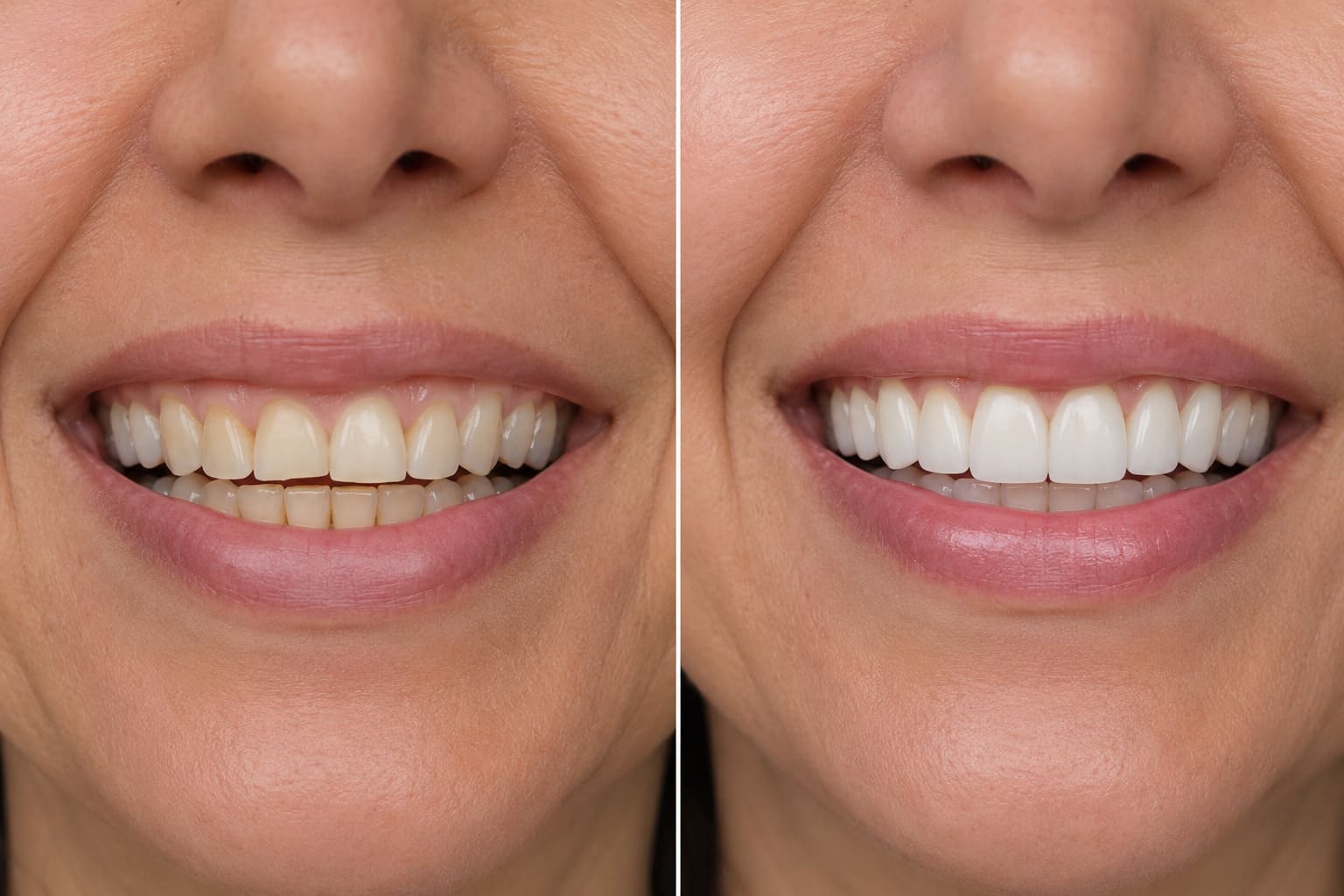
Composite bonding and porcelain veneers are both popular cosmetic dental treatments — but they work differently, cost differently and suit different patients. This guide explains both options clearly, compares them across the criteria that matter most, and helps you understand which is likely to be the better choice for your specific situation.
What Is Composite Bonding?
Composite bonding involves applying a tooth-coloured resin material directly to the tooth surface to change its shape, colour or length. The resin is sculpted by hand while soft, then hardened with a curing light and polished to a smooth finish. The entire process is completed chairside in a single appointment — no laboratory is involved.
Composite bonding is additive: in most cases, little or no tooth structure is removed. This makes it a fully reversible treatment — the bonding can be removed and the tooth returned to its original state if desired. It is also significantly less expensive than porcelain veneers and faster to complete.
What Are Porcelain Veneers?
Porcelain veneers are thin shells of ceramic — typically e.max lithium disilicate or zirconia — fabricated in a dental laboratory to precise measurements and bonded to the front surface of the tooth. The process involves a small amount of tooth preparation (typically 0.3 to 0.5 millimetres of enamel removal) to ensure the veneer sits flush with the surrounding teeth.
Because they are manufactured from ceramic rather than resin, porcelain veneers are more resistant to staining, more durable and more predictably lifelike in their optical properties. They last significantly longer than composite bonding and are the preferred option for complex full-smile transformations.
Direct Comparison: Composite Bonding vs Porcelain Veneers
| Factor | Composite Bonding | Porcelain Veneers |
|---|---|---|
| Treatment time | 1 appointment (1–3 hours) | 5–7 days (multiple appointments) |
| Tooth preparation | Usually none (additive) | Minimal (0.3–0.5mm enamel) |
| Reversibility | Fully reversible | Irreversible (enamel removed) |
| Durability | 5–7 years with care | 10–15+ years with care |
| Stain resistance | Moderate (resin can discolour) | High (ceramic is stain-resistant) |
| Aesthetic quality | Good — depends on clinician skill | Excellent — lab-fabricated precision |
| Cost per tooth (Kusadasi) | £60 – £150 | £170 – £280 |
| Cost per tooth (UK) | £200 – £500 | £700 – £1,200 |
| Suitability for major changes | Limited | Excellent |
| Laboratory involvement | None | Full laboratory fabrication |
? Not sure which treatment is right for you? Send us photos and we will advise during your free consultation. Get Expert Advice →
When Composite Bonding Is the Better Choice
Composite bonding is well-suited to:
- Minor aesthetic issues: Small chips, slight gaps (diastemas), minor discolouration or slight unevenness in tooth length.
- Younger patients: For patients under 25, preserving tooth structure is particularly important given the lifetime ahead. Composite bonding allows improvement without committing to irreversible enamel removal.
- Patients wanting a reversible option: Those unsure about a permanent change benefit from the ability to trial the aesthetic and return to baseline if desired.
- Budget constraints: For patients who want improvement but are working with a tighter budget, bonding can deliver meaningful results at a lower cost per tooth.
- Speed: If you need improvement quickly and cannot manage multiple days of appointments, bonding can be completed in a single session.
When Porcelain Veneers Are the Better Choice
Porcelain veneers are better suited to:
- Significant aesthetic transformation: If you want a substantial change in shade (from very dark to very white), shape (from short, uneven teeth to a uniform smile) or both, veneers deliver more predictable and dramatic results.
- Long-term durability: For patients who want results that last a decade or more with minimal maintenance, porcelain outperforms composite significantly.
- Stain resistance: Patients who drink a lot of coffee, red wine or tea, or who smoke, will find porcelain maintains its appearance more reliably over time.
- Full smile makeover: For a complete Hollywood Smile transformation covering eight to twelve or more teeth, porcelain veneers are the clinical and aesthetic standard.
- Patients with good oral health: Veneers require healthy underlying teeth and gum tissue. Patients with significant decay or gum disease need these addressed first.
Can You Combine Both Treatments?
Yes — and this is sometimes the optimal approach. A common scenario at Dentist Kuşadası involves porcelain veneers on the upper front six to eight teeth (those most visible when smiling) and composite bonding on adjacent teeth where only minor reshaping is needed. This approach achieves a high-quality aesthetic result while minimising the extent of irreversible tooth preparation.
Your treating dentist will advise on the most appropriate combination for your specific case during your consultation.
✈️ Ready to find out exactly which treatment your smile needs? Book a free consultation with Dentist Kuşadası today. Book My Free Consultation →
Frequently Asked Questions
Is composite bonding available in Turkey?
Yes. Composite bonding is available at Dentist Kuşadası and can be completed in a single appointment. For patients combining bonding with veneer treatment, the schedule is planned across the treatment days.
How long does composite bonding last?
Composite bonding typically lasts five to seven years before requiring touch-up or replacement. Longevity depends on oral hygiene, diet (avoiding very hard foods and staining beverages) and whether you grind your teeth. A night guard is advisable for patients with bruxism.
Does composite bonding stain?
Composite resin is more susceptible to staining than porcelain. Coffee, tea, red wine and turmeric can discolour the resin over time. Regular polishing during dental check-ups helps maintain the appearance. Patients who consume a lot of staining foods or drinks may prefer porcelain for longer-lasting colour stability.
Can composite bonding be replaced with veneers later?
Yes. Because composite bonding is additive and reversible, it can be removed and replaced with porcelain veneers at a later date without any additional preparation — the underlying tooth is in the same state as before the bonding was applied. This makes bonding a useful stepping-stone treatment for younger patients not yet ready to commit to veneers.
Which treatment hurts less?
Both composite bonding and porcelain veneer preparation are performed under local anaesthetic where any sensitivity is anticipated. Composite bonding typically requires little or no anaesthetic as no tooth structure is removed. Veneer preparation involves mild enamel reduction — local anaesthetic is used as needed. Neither procedure should cause significant discomfort during treatment.