

 Deutsch
 Dutch
Dutch
 Russian
 Turkish

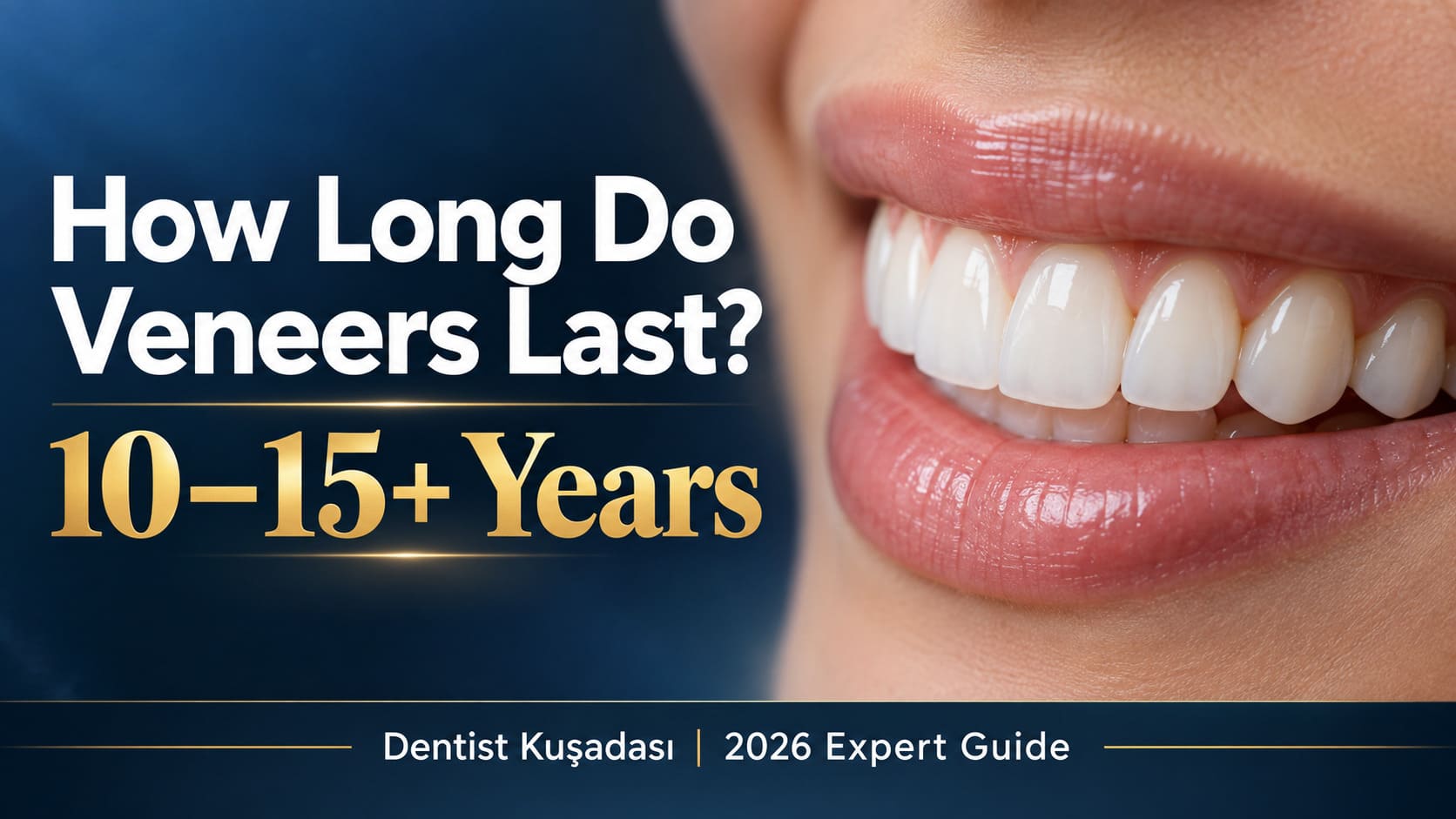
One of the most common questions patients ask before committing to porcelain veneers is how long they will last. The honest answer is: it depends — on the material, the quality of the clinical work, and most importantly, how well you look after them. This guide gives you a clear, evidence-based picture of veneer longevity by material type, the factors that affect lifespan, and the specific habits that make the biggest difference.
Veneer Lifespan by Material: What to Expect
Not all veneers are made from the same material — and the material choice has a significant impact on how long they last.
| Material | Typical Lifespan | Stain Resistance | Strength |
|---|---|---|---|
| e.max lithium disilicate (porcelain) | 10–15+ years | Excellent | Very good |
| Zirconia | 15–20+ years | Excellent | Outstanding |
| Composite resin (bonding) | 5–7 years | Moderate | Good |
| Traditional feldspathic porcelain | 10–15 years | Excellent | Moderate |
At Dentist Kuşadası, e.max lithium disilicate is the standard material for front tooth veneers — chosen for its combination of natural-looking translucency, stain resistance and durability. Zirconia is recommended for patients with bruxism (teeth grinding) or where additional strength is clinically indicated.
What Affects How Long Veneers Last?
The research on veneer longevity consistently shows that material choice and the quality of the initial placement account for roughly half the equation. The other half is patient behaviour and maintenance. These are the factors that matter most:
1. Quality of Bonding and Fit
A veneer that is precisely fitted and correctly bonded will outlast a poorly fitted one significantly. Marginal gaps — where the edge of the veneer meets the natural tooth — allow bacteria and moisture ingress that can undermine the bond and allow decay to develop beneath the veneer over time. Precision fit, achieved through intraoral scanning and CAD/CAM fabrication, is the foundation of long-lasting veneers.
2. Bruxism (Teeth Grinding)
Bruxism is the single most common cause of premature veneer failure. The repeated lateral forces generated during nocturnal grinding can fracture even the strongest ceramic. If you grind your teeth — and many people do so without realising it — a custom night guard is essential. Without one, even excellent veneers will have a shorter lifespan.
3. Diet and Eating Habits
Porcelain is strong but not indestructible. Hard foods — crusty bread, hard sweets, ice cubes, nuts — and habits like biting nails or chewing pens place localised stress on the veneer edge that can cause chipping over time. The risk is highest at the incisal edge (the biting edge) of front tooth veneers.
4. Oral Hygiene
Veneers themselves do not decay — but the natural tooth structure beneath and around them does. Poor oral hygiene allows plaque accumulation at the gum line and margins, which can lead to gum recession (exposing the unprepared tooth surface beneath the veneer) and decay at the margin. Brushing twice daily, flossing and regular professional cleaning maintain the health of the supporting tooth and gum.
5. Staining Habits
Porcelain veneers are highly resistant to staining. Composite resin veneers are not — they absorb colour from coffee, tea, red wine and tobacco over time. For patients who consume a lot of staining foods and drinks, porcelain is the significantly better long-term choice.
6. Regular Check-Ups
Six-monthly dental check-ups allow your dentist to assess the margins, bite and condition of your veneers, and to identify any early issues before they become larger problems. Many veneer failures that seem sudden are actually the end-stage of a process that was detectable months or years earlier.
? Wondering which veneer material is right for your lifestyle? Our team will advise based on your specific case during your free consultation. Book My Free Consultation →
Signs That Veneers May Need Replacing
Even well-maintained veneers will eventually need attention. Signs to watch for include:
- Chipping or cracking: Small chips can sometimes be repaired chairside with composite resin. Larger fractures typically require replacement.
- Dark line at the gum margin: A dark line appearing between the veneer and the gum can indicate gum recession exposing the underlying tooth or a breakdown of the bonding margin. This needs assessment.
- Sensitivity: New or increasing sensitivity in a veneered tooth may indicate a problem with the underlying tooth or the marginal seal.
- Colour change: Porcelain veneers should not discolour significantly. If a veneer appears to have changed colour, the bonding resin beneath it may have stained — a sign the marginal seal has been compromised.
- Looseness: A veneer that feels loose or detaches is a dental emergency — contact your dentist immediately and keep the veneer.
How to Make Your Veneers Last as Long as Possible
A practical summary of the habits that make the biggest difference:
- Wear a custom night guard if you grind — this is non-negotiable for veneer longevity
- Brush twice daily with a soft-bristle brush and non-abrasive toothpaste
- Floss daily — including carefully around the gum margins of veneered teeth
- Avoid biting into very hard foods directly on front veneers — cut food where possible
- Do not use your teeth as tools (opening packaging, biting thread)
- Attend six-monthly check-ups and annual professional cleaning
- If you smoke, reducing or stopping will benefit both the veneers and the underlying gum health
What Happens When Veneers Need Replacing?
When a veneer reaches the end of its lifespan, it is replaced with a new veneer — the process is similar to the original placement. The existing veneer is carefully removed, the tooth surface is assessed and cleaned, and a new restoration is fabricated and bonded.
Because a small amount of enamel was removed during the original preparation, veneers are considered a permanent commitment in the sense that the tooth will always require a restoration going forward. This is why the original material choice and clinical quality matter so much — the goal is to minimise the total number of replacement cycles over the patient's lifetime.
Dentist Kuşadası provides aftercare guidance and a written treatment guarantee with every veneer treatment. If a veneer fails within the guarantee period due to a manufacturing defect or bonding failure, it is replaced at no additional cost.
✈️ Ready to invest in veneers that last? Get a free written treatment plan from Dentist Kuşadası before you travel. Get My Free Quote →
Frequently Asked Questions
Do porcelain veneers stain over time?
Porcelain veneers themselves are highly stain-resistant — the ceramic surface does not absorb colour. The bonding resin at the margins can stain over time if the marginal seal is compromised, which is why regular check-ups and good oral hygiene matter. Composite resin veneers (bonding) do stain more readily than porcelain.
Can veneers be whitened?
No. Porcelain and ceramic materials do not respond to whitening agents. The shade of a veneer is fixed at the point of fabrication. This is why shade selection is so important before treatment begins — and why patients who want very white veneers should select the shade they want before the laboratory fabricates the restorations.
What happens if a veneer falls off?
Keep the veneer — do not throw it away. Contact your dentist as soon as possible. In many cases, a detached veneer can be re-bonded if it is undamaged and the underlying tooth surface is intact. If you are away from home, contact Dentist Kuşadası for guidance on managing the situation until you can be seen.
Do veneers require any special cleaning products?
No special products are required. Use a soft-bristle toothbrush and a low-abrasive fluoride toothpaste. Avoid whitening toothpastes — they contain abrasive particles that can scratch the porcelain surface over time. A water flosser or interdental brushes can be used alongside standard flossing.
Are veneers covered by UK dental insurance?
Most UK dental insurance policies do not cover elective cosmetic treatment such as porcelain veneers. Some comprehensive policies may cover a portion of the cost if there is a restorative element to the treatment. Check your policy terms carefully and confirm with your insurer before treatment.