

 Deutsch
 Dutch
Dutch
 Russian
 Turkish
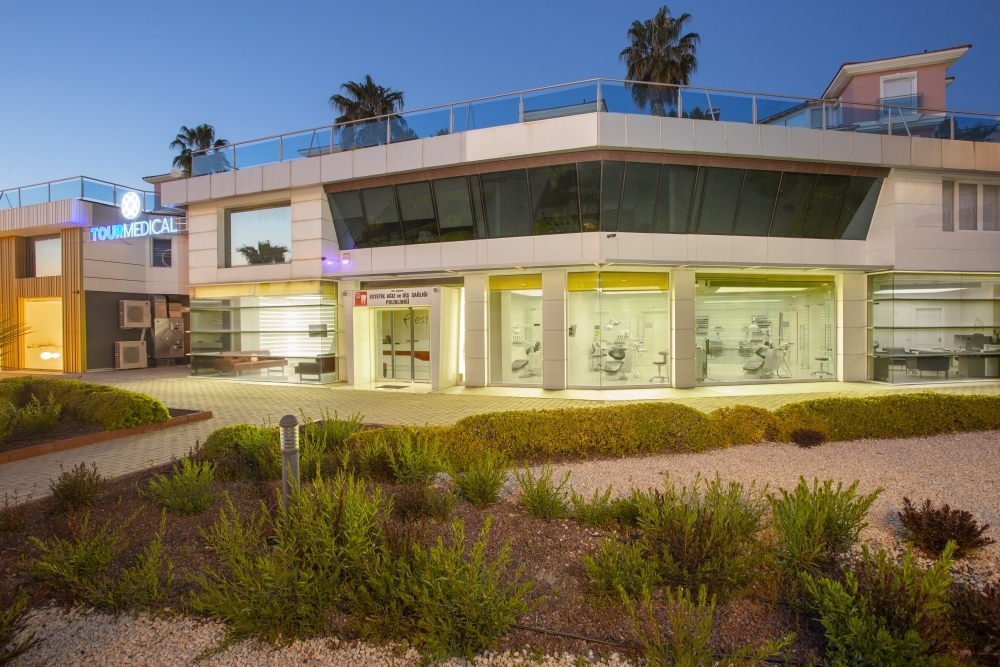
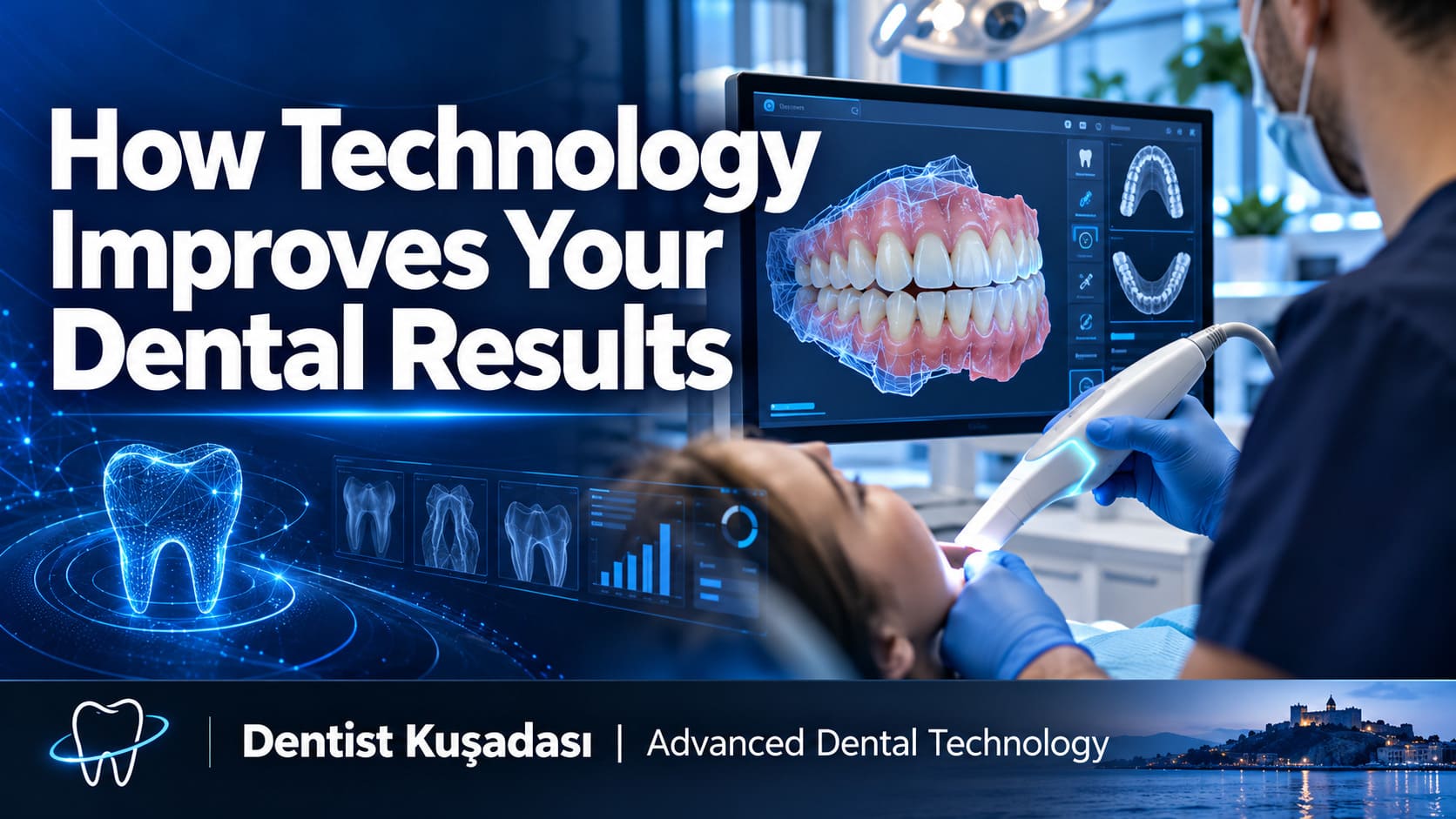
The quality of a dental result depends on two things: the skill of the clinician and the precision of the tools they use. At Dentist Kuşadası, advanced digital technology is integrated into every stage of treatment — from initial assessment through to final delivery. Here is an explanation of the key technologies we use, what each one does, and why it matters for your outcome.
CBCT 3D Scanning — Precise Planning Before Treatment Begins
Cone Beam Computed Tomography (CBCT) is a three-dimensional imaging system that produces a detailed digital model of the teeth, jaw, bone structure, nerve pathways and sinus cavities. It is a fundamental tool for implant planning — it tells the clinician exactly where bone is available, how dense it is, and where implants can be placed safely without risk to adjacent structures.
Traditional two-dimensional X-rays provide a flat image that can obscure critical anatomy. CBCT scanning removes this limitation, allowing Dr. Elcin Kole to plan implant placement with sub-millimetre accuracy before the procedure begins. For patients who have been told they may need a bone graft, a CBCT scan often reveals sufficient bone in locations not visible on standard X-rays — potentially avoiding an additional procedure entirely.
CBCT scanning is also used for complex veneer and crown cases where root canal status and bone support need to be assessed before restoration design begins.
Digital Smile Design — See Your Result Before Treatment Starts
Digital Smile Design (DSD) is one of the most patient-focused advances in cosmetic dentistry. Using photographs and video of your face and smile, specialised software creates a digital preview of your proposed treatment outcome — showing you exactly how your new veneers, crowns or smile makeover will look before any preparation of your teeth begins.
This preview is not a rough approximation. It is a precise visual model that accounts for your facial proportions, lip line, gum level and the natural shape of your existing teeth. Shade, length and tooth shape can all be adjusted in the software until the design matches what you want. Only when you are fully satisfied does treatment proceed.
For patients who have always been unsure exactly what they want from cosmetic treatment, DSD removes the guesswork and gives you confidence in the outcome before committing.
? Want to see a digital preview of your new smile before you travel? Send us your photos and we will prepare a preliminary design during your free consultation. Book My Free Consultation →
Intraoral Scanner — No More Messy Impressions
Traditional dental impressions involve filling a tray with a thick putty material and placing it over the teeth for several minutes — an experience most patients find uncomfortable and occasionally triggering for those with a strong gag reflex.
An intraoral scanner replaces this entirely. A small wand — similar in size to an electric toothbrush handle — is passed gently around the mouth, capturing thousands of images per second to build a precise digital model of the teeth and gum tissue. The scan takes a few minutes, is completely comfortable, and produces a more accurate model than any traditional impression can achieve.
The digital model is sent directly to the dental laboratory in a format that eliminates distortion and human error from the traditional impression-to-cast process. The result is restorations — veneers, crowns, bridges — that fit more accurately from the first fitting, requiring less chairside adjustment and providing a better long-term marginal seal.
CAD/CAM Milling Technology — Precision-Engineered Restorations
Computer-Aided Design and Computer-Aided Manufacturing (CAD/CAM) technology allows dental restorations to be designed digitally and milled from a solid block of ceramic or zirconia with sub-millimetre precision.
The process begins with the digital scan. The laboratory designer uses specialised software to sculpt the restoration in three dimensions, adjusting contacts, occlusion and aesthetics to exact specifications. The design is then sent to a milling machine that carves the restoration from a pre-fired ceramic block — producing a result with consistent material density and no voids or inconsistencies that can occur in hand-built restorations.
For zirconia crowns and bridges in particular, CAD/CAM milling produces a material strength and fit precision that was not achievable with traditional techniques. This directly translates to longer-lasting restorations with less risk of fracture or marginal leakage over time.
Digital X-Ray — Less Radiation, More Detail
All X-ray imaging at Dentist Kuşadası is digital. Compared to traditional film-based X-rays, digital sensors require significantly less radiation exposure — typically 70–80% less — while producing images that can be enhanced, magnified and shared instantly with the clinical team and the patient.
For routine assessment, digital periapical and bitewing X-rays are taken as needed. For surgical planning, CBCT scanning provides the full three-dimensional picture. The combination gives the clinical team a complete and accurate view of your dental health from the first appointment.
Why Technology Matters for Dental Tourism Patients Specifically
For patients travelling from the UK or Ireland for dental treatment, the precision of technology carries additional significance. You are completing a full course of treatment in a condensed timeframe — typically five to seven days — rather than returning for multiple appointments over several months.
Advanced imaging and digital design mean that the assessment, planning and fabrication stages can proceed with confidence and accuracy within this compressed schedule. Restorations that fit accurately from the first fitting mean fewer adjustments and a more efficient use of your time in Kusadasi. The result you leave with is the result you will live with — and the technology Dentist Kuşadası uses is designed to make that result as precise and durable as possible.
✈️ Ready to experience the difference advanced technology makes? Book your free consultation with Dentist Kuşadası today. Book My Free Consultation →
Frequently Asked Questions
Does Dentist Kuşadası use digital smile design for all cosmetic treatments?
Yes. Digital smile design is a standard part of the consultation process for all veneer and crown treatments at Dentist Kuşadası. A preliminary digital preview can also be prepared from photos sent before you travel.
Is CBCT scanning safe?
Yes. CBCT scanning uses a focused, low-dose X-ray beam that rotates around the head. The radiation dose is higher than a standard dental X-ray but significantly lower than a medical CT scan, and is considered clinically acceptable when used for appropriate diagnostic purposes such as implant planning.
What is the difference between an intraoral scan and a traditional impression?
A traditional impression uses physical putty material pressed against the teeth to create a cast. An intraoral scanner creates a digital model using optical imaging — no physical material, no discomfort, and greater dimensional accuracy. The digital model is used directly by the CAD/CAM system, removing additional steps that can introduce inaccuracy.
Does the technology used affect how long my restorations last?
Yes, directly. More precise fit means better marginal sealing — which reduces the risk of decay forming beneath a restoration. CAD/CAM milled zirconia has consistent material density that reduces fracture risk. Digital planning reduces the likelihood of implant complications. Better technology produces better long-term outcomes.
Can I receive my CBCT scan results and treatment records digitally?
Yes. Dentist Kuşadası provides patients with digital copies of their X-rays, CBCT data and clinical records on request. These can be shared directly with your dentist at home for ongoing monitoring and follow-up care.